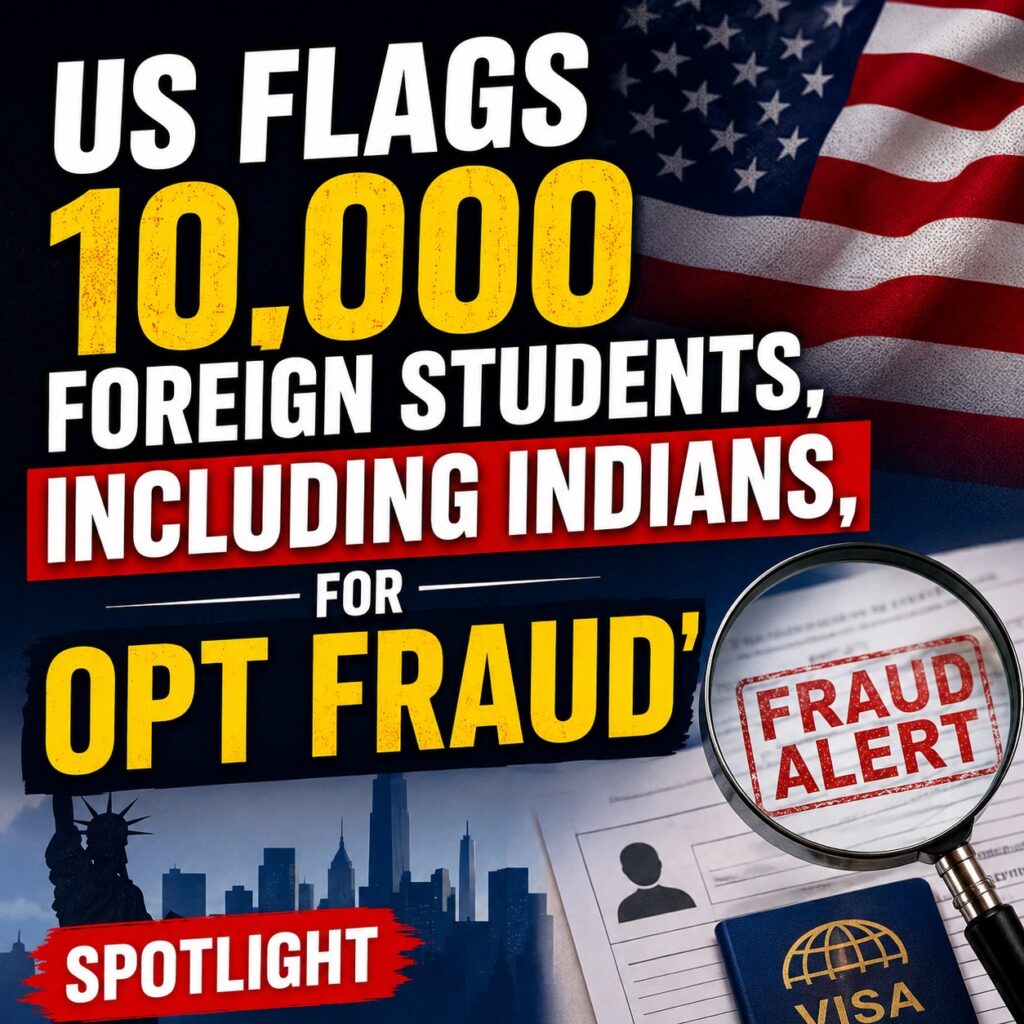
10,000 foreign students, including Indians, are flagged by the US for alleged OPT fraud.
Following the start of a significant investigation by US immigration officials into alleged abuse of the Optional Practical Training (OPT) program, thousands of international students, including many Indian students, are facing uncertainty. Students who intend to study or work in the US after graduation are extremely concerned about the problem.
Recent reports state that under the OPT program, US Immigration and Customs Enforcement (ICE) has connected around 10,000 international students to “highly suspicious employers.”
Due to officials’ allegations that the program is being abused through fictitious companies, false employment records, and illegal work arrangements, the development has once again drawn the OPT system into political and immigration discussions in the United States.
OPT: What Is It?
For foreign students with F-1 visas studying in the US, Optional Practical Training (OPT) is a work permission program. It enables qualified students to obtain short-term employment in their subject of study following graduation.
Under OPT, students may work for a maximum of 12 months.
A further 24-month extension may be granted to STEM students.
OPT is a common route for students to obtain H-1B work permits.
OPT has long been a major factor in overseas students’ decision to pursue higher education in the United States.
Why OPT Is Being Investigated by US Authorities
According to US authorities, they found widespread irregularities involving employers associated with OPT students.
Officials purportedly discovered during investigations:
Unoccupied office spaces
Locked structures that are registered as business addresses
Businesses that engage in little to no actual commercial activity
Untrustworthy labor arrangements purportedly overseen from India remotely
Using fictitious work records to keep one’s visa status
According to ICE agents, some companies claimed to hire a lot of international students but seemed to just exist on paper.
Among Those Affected Are Indian Students
Given that India sends one of the greatest numbers of overseas students to the United States each year, Indian students are thought to be among the most affected.
Investigators are looking into whether remote supervision and fictitious training arrangements violated OPT requirements because reports indicate that some of the suspicious employers may have operational ties to India.
Experts do note, though, that not all students associated with a company that has been detected may have committed fraud on purpose. It’s possible that many students started working for companies without being aware of any abnormalities in their operations.
OPT is referred to by ICE as a “Magnet for Fraud.”
In his forceful remarks on the probe, Acting ICE Director Todd Lyons asserted that the OPT program had “become a magnet for fraud.” Additionally, officials connected a few cases to more general issues including visa fraud and abuse of immigration benefits.
International students who depend on OPT to obtain US work experience after graduation are more afraid as a result of the statements.
Are OPT Regulations Going to Get Tougher?
Tighter immigration surveillance and more stringent compliance inspections for foreign employers and students could result from the most recent scandal.
Potential modifications in the future might include:
Enhanced vetting of employers
Additional site examinations
More stringent reporting guidelines
Quicker removal of questionable OPT records
Increased scrutiny for H-1B applications and visa renewals
In the US, certain political organizations are already advocating for OPT program restrictions or revisions.
What This Signifies for Students Now and in the Future
While they shouldn’t worry, students who intend to study in the US should exercise additional caution when choosing companies during OPT.
Professionals counsel students to:
Check if businesses are officially registered.
Steer clear of phony consulting positions
Verify the authenticity of your income job records.
Update your job records.
Pay close attention to all immigration regulations.
Additionally, proposals that guarantee visa renewals without appropriate employment arrangements or appear suspiciously simple should be avoided by students.
Effects on Students in India
Indian families are worried about the announcement because many students spend large sums of money on US schooling in the hopes of finding employment after graduation.
If OPT regulations are tightened:
It can get more difficult to find employment possibilities.
There could be more immigration inspections.
Background checks for employers can be required.
Stronger paperwork can be required for students to comply with visa requirements.
However, under current regulations, respectable students employed by reputable companies are still anticipated to be eligible.
Why Students Are Still Attracted to the US
The US is still one of the most popular places in the world to pursue higher education despite the controversy because:
Universities with international recognition
Excellent job prospects
High-paying positions in STEM and technology
Facilities for research
Global exposure and networking
Many experts think that rather than removing chances for legitimate overseas students, the present crackdown is primarily focused on preventing fraud.
Concluding Remarks
In US immigration talks, the most recent OPT fraud probe involving 10,000 international students has gained significant attention. The scenario has caused fear among international students, particularly Indians seeking professions in the United States, even if authorities say they are targeting fraudulent operations and phony firms.
This circumstance emphasizes the significance of adhering to immigration regulations, selecting legitimate jobs, and keeping appropriate documents throughout their academic and professional journeys for students who intend to study overseas.
Although there are still many options in the US educational system, students now need to be more aware and careful than before.