Read time: 7 min read
2026 Is Redefining What a Rich Country Means
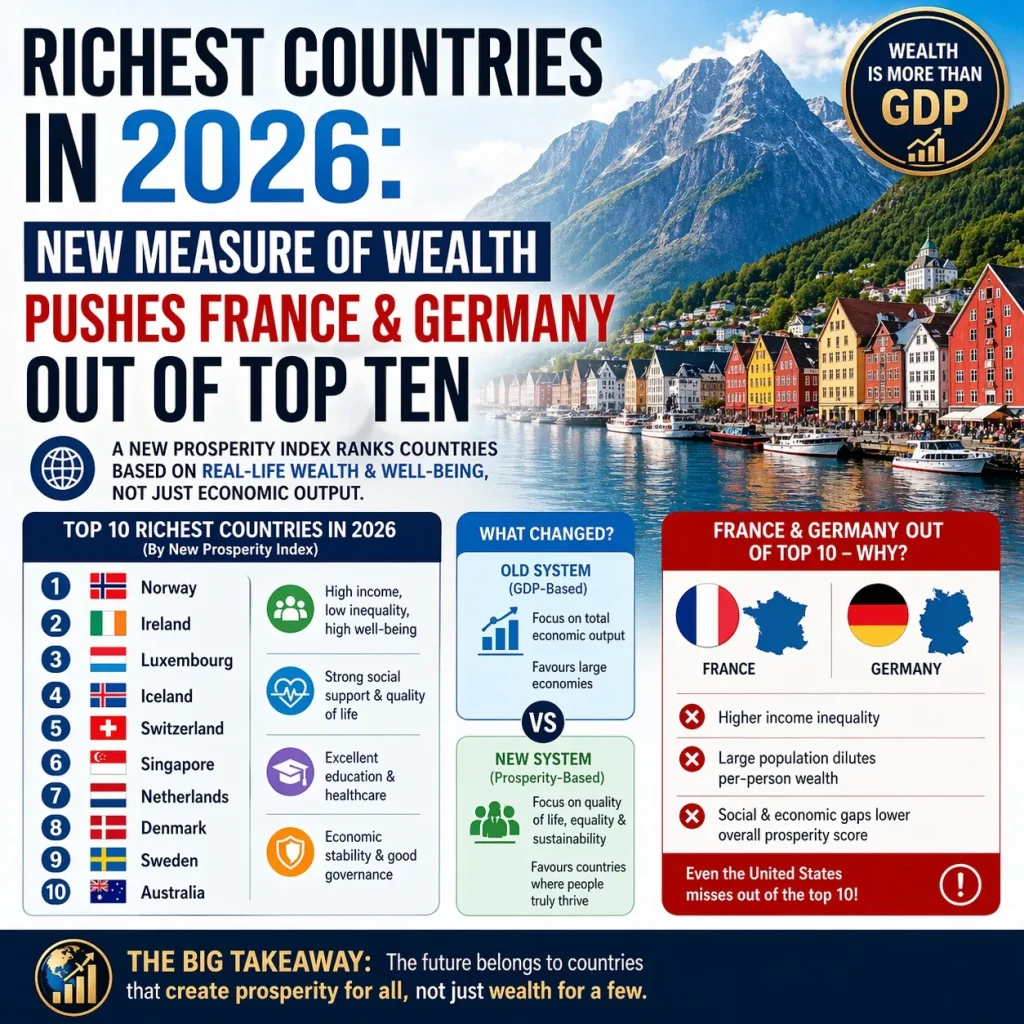
For years, countries were often judged by total GDP or GDP per capita alone. In 2026, newer ranking frameworks are focusing on real prosperity, not just output.
That means quality of life, income distribution, and long-term human development now carry more weight in global comparisons.
The result is a major ranking shift where some smaller but highly developed countries outperform larger economies in overall prosperity scores.
- Old model: production-focused wealth measurement
- New model: people-centered prosperity measurement
- Main takeaway: growth without inclusion is no longer enough
What Is the New Prosperity Measurement Based On?
The updated approach combines economic and social indicators to evaluate how well people actually live, not just how much an economy produces.
- GDP per capita
- Gross National Income (GNI)
- Human Development Index (HDI)
- Income inequality (Gini coefficient)
- Poverty rate and access to social support systems
Who Leads the Richest Countries List in 2026?
Under prosperity-based comparisons, smaller advanced nations with strong social systems tend to lead.
Countries often highlighted at the top include Norway, Ireland, Luxembourg, Iceland, and Switzerland.
- Strong welfare and public services
- Lower inequality
- Higher human development outcomes
- Balanced economy and quality living standards
Why Are Some Big Economies Ranked Lower?
Large economies such as France and Germany remain economically powerful, but they may rank lower in prosperity-based systems when inequality, demographic pressure, or social gaps reduce per-person outcomes.
This does not mean these countries are weak economies; it means the ranking lens has changed from scale to inclusiveness and lived well-being.
- Income distribution challenges can lower prosperity scores
- Large populations can dilute per-capita outcomes
- Social and economic inequality now affects final rank more directly
GDP vs Real Wealth: The Big 2026 Shift
Traditional GDP rankings favor larger economies because they capture total output. Prosperity rankings, in contrast, ask whether growth is translating into better lives for citizens.
That is why compact, well-governed, high-income societies can outrank larger nations in the new framework.
- GDP model: economy size first
- Prosperity model: quality of life first
- New benchmark: inclusive, sustainable, and human-centered growth
What This Means for India and Emerging Economies
For fast-growing countries, the lesson is clear: economic expansion must be matched with social infrastructure and fair distribution.
Future global rankings are likely to reward inclusive development, not just high output.
- Economic growth alone is not sufficient
- Policy focus should include income equity and social mobility
- Human development outcomes will shape long-term ranking strength
Final Insight: Richness Now Means How People Live
The 2026 prosperity narrative shows a global mindset change: true wealth is measured by the quality of citizens’ lives, not by output figures alone.
For students, professionals, and policy observers, this new lens is important when evaluating destination countries for education, work, and long-term settlement.
- Keyword focus: richest countries in 2026
- Keyword focus: prosperity index countries
- Keyword focus: GDP vs real wealth
- Keyword focus: why France and Germany are not top 10 in new models