Read time: 9 min read
Introduction: Start with a Clear Roadmap
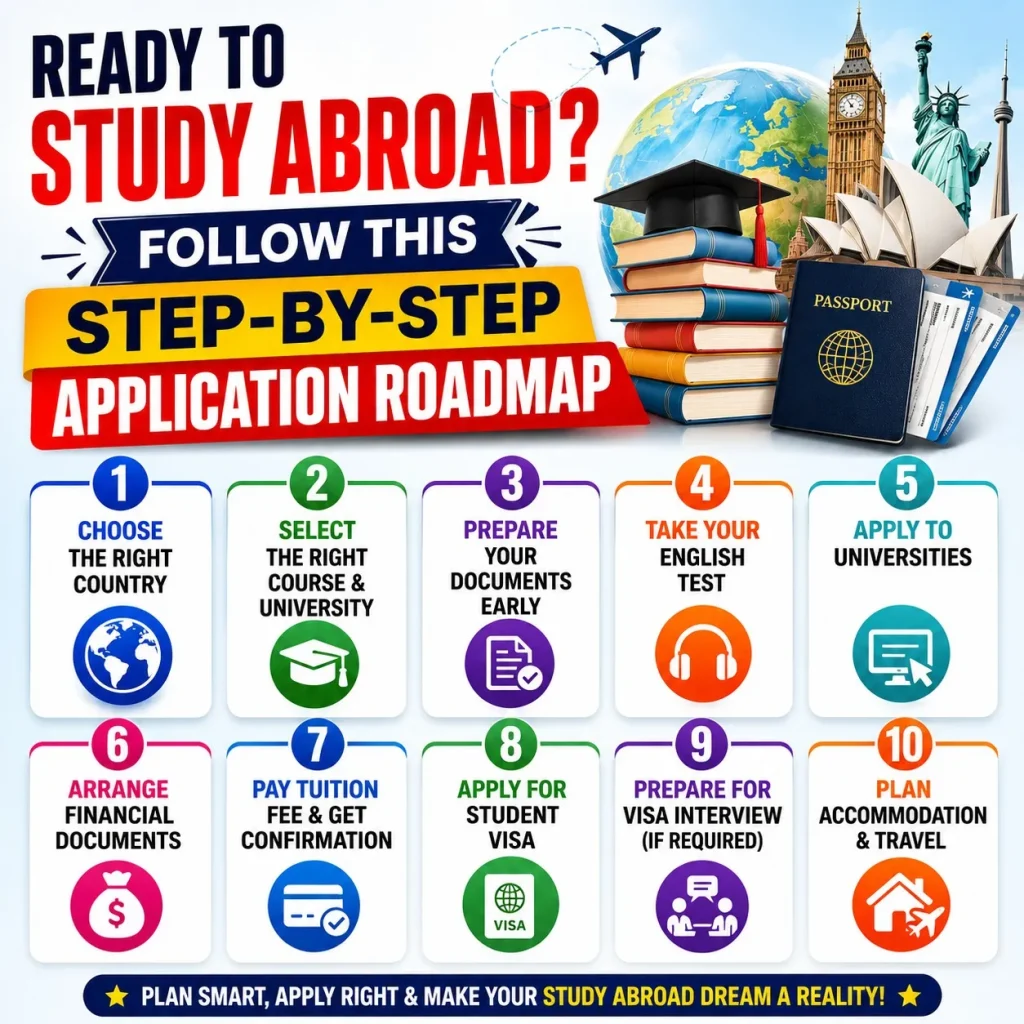
Studying abroad in 2026 can feel overwhelming if you do not know where to begin. A good roadmap removes confusion and helps you move through each stage in the right order.
From choosing the country to arranging your visa and travel, each step affects the next one. Planning early reduces stress and improves your chances of a successful application.
- Choose the right country first
- Align your course with your academic profile
- Prepare documents early to avoid delays
Step 1: Select the Appropriate Nation
Every study destination offers different tuition costs, job markets, visa outcomes, and post-study opportunities. Your choice should match your budget, goals, and long-term plans.
- Canada: PR potential, student-friendly policies, and work opportunities
- UK: Shorter courses and globally respected universities
- Australia: Strong lifestyle, good part-time work, and post-study options
- Germany: Low tuition and strong technical education
- New Zealand: Peaceful environment and simpler student life
Step 2: Choose the Right University and Course
Students often choose courses based on what friends are doing, but the better approach is to evaluate your own profile and future goals.
- Match the course with your educational background
- Consider career objectives and job demand
- Review the budget and PR possibilities before deciding
Step 3: Get Your Documents Ready Early
Incomplete documentation is one of the main reasons applications are delayed. Organize everything before you apply so you can respond quickly when a university or visa office requests it.
- Passport
- Academic certificates and transcripts
- IELTS, PTE, or TOEFL score
- Statement of Purpose
- Letters of Recommendation
- Work experience documents if applicable
- Financial documents
Step 4: Complete the English Language Exam
Most universities require proof of English proficiency. The exact score depends on the institution and country, but an early test plan helps you avoid last-minute pressure.
- Common exams: IELTS, PTE, TOEFL
- Some universities also accept Duolingo
- A common IELTS range is 6.0 to 6.5 overall
Step 5: Submit Applications to Universities
Once your documents are ready, submit applications without delay. Many institutions review files in order, and early applications often move faster than late ones.
- Upload required files carefully
- Pay the application fee if needed
- Wait for conditional or unconditional offer letters
Step 6: Organize Financial Records
Financial proof is one of the most important parts of a study abroad application. Visa officers want to see that your tuition and living expenses are covered by real, traceable funds.
- Bank statements
- Education loans
- Sponsorship documents
- Income proof and ITRs
- Avoid sudden unexplained cash deposits before applying
Step 7: Pay Tuition and Confirm Your Seat
After receiving the offer letter, many universities require a deposit or part tuition payment to confirm your seat. These documents are then used in the visa stage.
- CAS for the UK
- LOA for Canada
- COE for Australia
- Enrollment confirmation documents for visa filing
Step 8: Apply for the Student Visa
This is the most important stage. Your visa file should include the correct forms, financial proof, academic records, and the official offer or enrollment document.
- Passport
- Offer letter
- Financial records
- SOP or GTE-style statement where required
- Medical reports and English test results
- Tuition receipt
Step 9: Prepare for the Visa Interview
Some countries interview students before approval. Be ready to explain your country choice, course choice, sponsor, and future plans clearly and honestly.
- Why did you choose this country?
- Why this specific course?
- Who is funding your education?
- What are your plans after graduation?
Step 10: Arrange Travel and Accommodation
Once the visa is approved, finalize your travel and living arrangements before departure. This helps you settle in faster after arrival.
- Book your flight
- Arrange accommodation
- Learn local student rules and part-time work regulations
- Keep emergency contacts ready
Common Mistakes to Avoid
Many delays and refusals come from avoidable mistakes rather than from bad luck.
- Applying without enough research
- Writing a weak SOP
- Submitting false documents
- Waiting until the last minute
- Ignoring country-specific visa rules
Why 2026 Is Still a Strong Year to Study Abroad
Even with tighter immigration rules, 2026 still offers strong opportunities for students who prepare properly. Countries continue to look for genuine learners and skilled future workers.
- Plan early and apply strategically
- Build a strong academic and financial file
- Choose a course that supports long-term career growth
Conclusion
Studying abroad is easier when you follow a clear step-by-step plan. The right preparation can improve your admission chances, strengthen your visa application, and help you travel with confidence.
If you want to study overseas in 2026, start early, stay organized, and make decisions that fit your profile and goals.
- Start with the country, then the course, then the documents
- Keep your finances and records clean
- Use expert guidance if you want to avoid preventable mistakes