Introduction: The Shift Nobody Can Ignore
For decades, the United States, United Kingdom, Canada and Australia dominated the global education map and were treated as the default dream for international students.
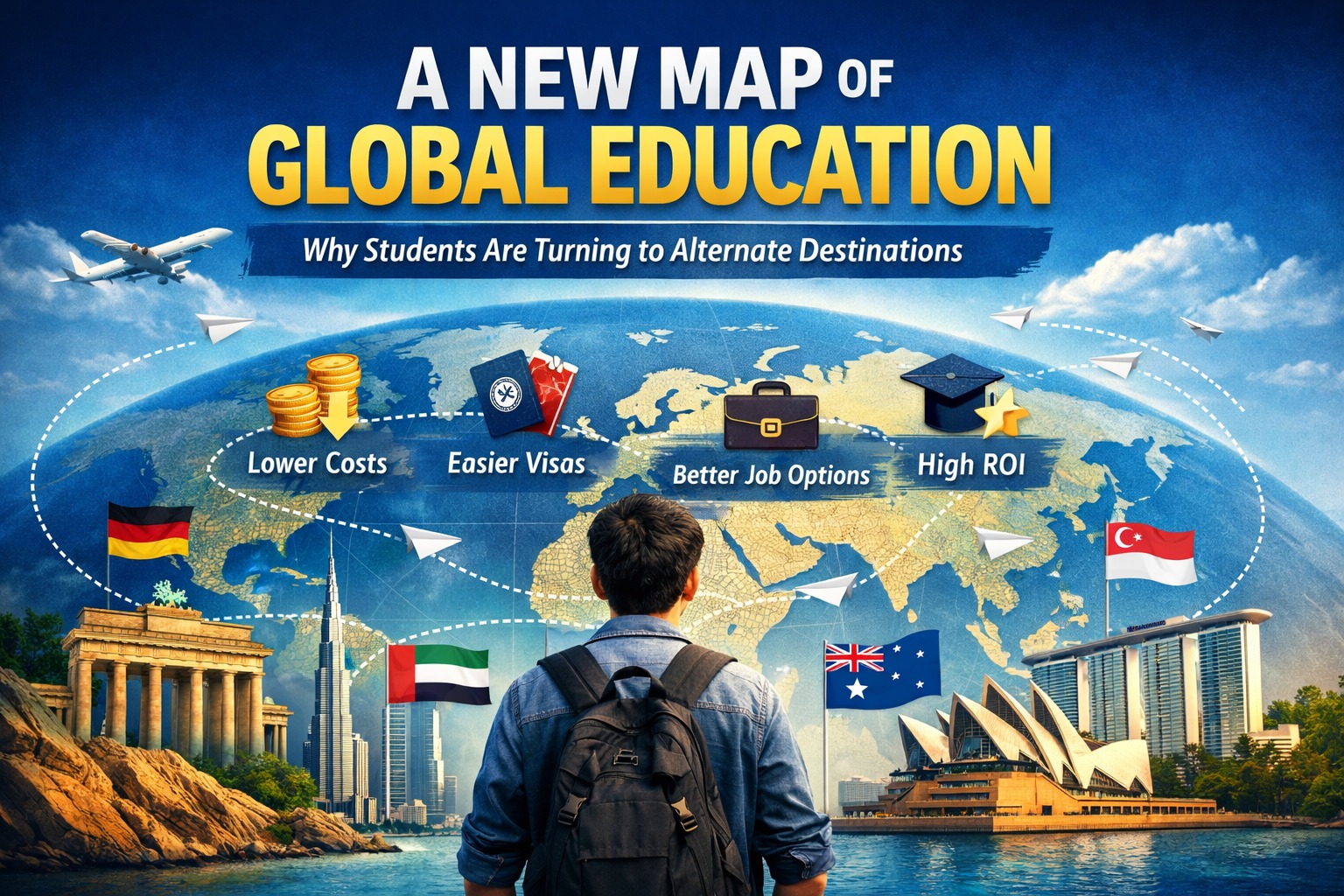
By 2026, however, the landscape has changed. A new map of global education is emerging as students actively explore alternate destinations that offer lower costs, smoother processes and stronger long-term outcomes.
What Is Driving This Global Shift?
The movement away from the traditional Big 4 destinations is not a trend based on fashion. It is driven by practical concerns around money, visas, career outcomes and stability.
- Rising tuition and living costs in conventional destinations make many families question whether the return on investment is worth it.
- Stricter visa policies, unpredictable approval rates and constantly changing rules create fear and uncertainty.
- Students now evaluate countries on outcomes: job markets, post-study work rights and pathways to long-term settlement.
- Strong universities in Europe, Asia and the Middle East are gaining global recognition with industry-linked, English-taught programs.
1. High Costs in Traditional Study Destinations
Tuition fees and living expenses in countries like the US and UK have increased sharply. For many middle-class families, what was once a dream now looks like a heavy financial risk.
Students are asking harder questions: Is the investment justified? Can I achieve similar or better career outcomes from a more affordable destination?
- Growing focus on value and payback period instead of brand alone
- Greater interest in public universities and low-tuition regions
- Preference for countries where education costs match earning potential
2. Stricter Visa Policies and Uncertainty
Frequent visa rule changes, lower approval rates and long processing times are now major deciding factors for international students.
Many students are avoiding destinations where policies feel unpredictable and post-study work options are unclear.
- Preference for countries with transparent, stable immigration rules
- Higher trust in destinations with consistent visa approval patterns
- More interest in places that clearly support international graduates in the job market
3. Better ROI and Career Outcomes in Alternate Destinations
Today’s students are outcome-focused. They want quality degrees, but they also expect strong job prospects, practical exposure and realistic chances of recovering their investment.
Alternate destinations are attractive because they combine more affordable education with good labour markets and, in many cases, clearer routes to long-term residence.
- Lower tuition fees and manageable living costs
- Shorter course durations in some countries, leading to faster entry into the job market
- Growing demand for skilled professionals in engineering, IT, healthcare, finance and business
- In some cases, smoother permanent residency or long-term stay options
4. Global Recognition Beyond the Traditional Big 4
The belief that only a handful of countries offer quality education is outdated. Many universities in Europe, Asia and the Middle East now feature in global rankings and are known for strong industry connections.
Success is increasingly driven by skills, experience and networking rather than only by the country name on the degree.
- More English-taught programs across Europe and Asia
- Curricula designed with direct input from employers
- Campuses that are culturally diverse and globally connected
Top Alternate Study Destinations in 2026
Several countries are now emerging as powerful alternatives to the traditional Big 4, offering a smart balance of cost, quality and opportunity.
Germany: An Affordable Powerhouse
Germany has become a top choice for students seeking world-class education at a reasonable cost, especially in engineering, technology and applied sciences.
- Low or zero tuition fees at many public universities
- Strong demand for engineers and technical professionals
- Focus on practical training, research and industry ties
Ireland: Europe’s Technology Hub
Ireland is rapidly growing as a preferred destination, especially for students in IT, pharmaceuticals and finance.
- Home to many global technology and pharmaceutical companies
- Attractive post-study work options for graduates
- Dynamic job market and strong links with multinational employers
New Zealand: Balanced Lifestyle and Education
New Zealand offers a combination of high-quality education, welcoming policies and a peaceful environment, making it ideal for students who value balance.
- High visa success rate and student-friendly regulations
- Safe, inclusive and supportive society
- Opportunities to work during and after studies in key sectors
Singapore: Asia’s Education and Business Hub
Singapore has built a strong reputation as a premium destination for business, finance and technology education, with the added advantage of being close to India.
- Internationally recognised universities and institutes
- Strategic location with access to Asia-Pacific opportunities
- Robust business, finance and technology ecosystem
UAE: A Rapidly Growing Education Destination
The UAE is emerging as a serious alternative for students who want international exposure with strong links to business and hospitality industries.
- International branch campuses of leading global universities
- Business-friendly environment and strong service sector
- Relatively straightforward visa and work opportunities compared to some Western countries
Changing Student Mindsets: From Dreams to Strategies
Earlier, many students simply followed the most popular destinations without deep analysis. In 2026, students are far more informed and strategic.
They compare countries, courses and visa pathways carefully before deciding where to invest their time and money.
- Focus on long-term career outcomes instead of short-term excitement
- Greater use of data, research and real student experiences
- Clear questions around ROI, job markets and settlement options
The Role of Professional Guidance in This New Era
With so many new options, choosing the right country and course can feel overwhelming. This is where expert counselling becomes crucial.
A good consultancy helps students match their academic background, budget and goals with the right destinations and programs.
- Compare multiple countries based on your profile and priorities
- Identify courses and universities with strong return on investment
- Avoid risky or unsuitable options that may lead to refusals or disappointments
- Create a clear, step-by-step plan for admissions, visas and career growth
Conclusion: The Future of Global Education
The global education map is no longer limited to a handful of nations. It is broader, more flexible and full of new possibilities for those who are willing to explore.
In 2026 and beyond, success will depend less on choosing the most famous country and more on choosing the right country for your goals.
- Students who adapt to this new map will enjoy more options and better outcomes
- Strategic planning now matters more than simply following trends
- The smartest choice is the one that aligns with your long-term vision
Call to Action: Plan Your Own Global Education Map
If you are planning to study abroad, do not just follow the crowd. Take time to understand new destinations, compare your choices and design a clear path for yourself.
Your future deserves more than a trend; it needs a well-thought-out strategy.
- Explore multiple countries and not just the traditional Big 4
- Evaluate each option for cost, ROI, visa policies and career scope
- Seek professional guidance to avoid common mistakes and missed opportunities